
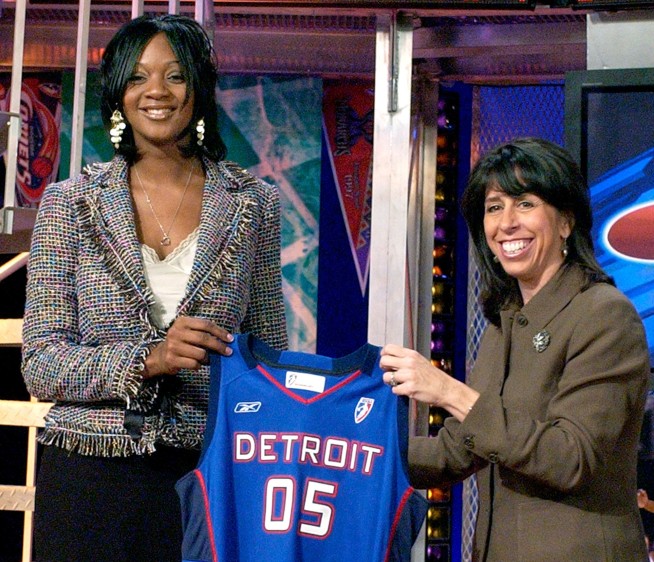
The women’s basketball world is grieving the loss of former WNBA center and two-time champion Kara Braxton, who died at age 43 following a car crash in Atlanta — a heartbreaking reminder of how fragile life can be, even for those who once looked indestructible on the court.
The Atlanta Dream released a statement on X honoring Braxton’s ties to the city and the state she called home:
“The Dream family mourns the loss of former WNBA player, Kara Braxton. Kara called Atlanta home and played at the University of Georgia. Our hearts are with Kara’s husband and sons and all those who remember her at this difficult time.”

For many fans in Georgia, Braxton wasn’t just a former pro — she was one of their own. A standout at the University of Georgia, she built her reputation as a dominant interior force long before stepping onto a WNBA floor.
At 6-foot-6, Braxton was one of the most physically imposing post players of her era. She controlled the paint with raw strength, relentless rebounding, and a shot-blocking presence that made opponents think twice about every drive. Her punishing low-post game turned matchups into battles of survival, not finesse.
But what made her invaluable wasn’t just size — it was substance.
Throughout her career in the WNBA, Braxton played for multiple teams and contributed to championship runs, embracing the kind of role every contender needs but few players truly love. She did the dirty work. Set bone-rattling screens. Fought for every loose ball. Protected teammates. And when the moment demanded toughness, she delivered.
Teammates often described her as fiercely competitive between the lines but deeply supportive behind the scenes — a player who could challenge you in practice and then lift you up when confidence dipped. She brought grit without ego, intensity without selfishness.
Off the court, Braxton remained connected to the game and to her community. She mentored younger players, advocated for women’s sports, and served as a living blueprint for aspiring post players who didn’t see themselves reflected in flashy highlight reels. Her career proved that dominance, resilience, and persistence could carry you all the way to championships.
Following news of her passing, tributes poured in from across the basketball landscape — former teammates, coaches, organizations, and fans sharing stories of both the competitor they feared and the person they loved.
Because beyond the rebounds, blocks, and titles, Kara Braxton’s impact was human. She represented a generation of players who helped build the league’s physical identity and competitive backbone during a formative era for women’s professional basketball.
Her legacy now lives on in the championships she helped secure, the athletes she inspired, and the countless battles in the paint that defined her career.
The hardwood will move forward. The game always does.
But players like Kara Braxton don’t disappear from it — they become part of its foundation.
You may also like
-
All For the A: City Skyline to Shine Dream Blue for Historic WNBA Finals
-
Defense Wins Championships: Reese, Howard and Canada Earn WNBA All-Defensive Honors
-
Atlanta United Cruises Past CF Montréal 3-0
-
Dream Bring WNBA Finals to State Farm Arena for Historic Basketball Doubleheader
-
Hawks Edge Thunder 113-110 in Preseason Thriller at State Farm Arena