
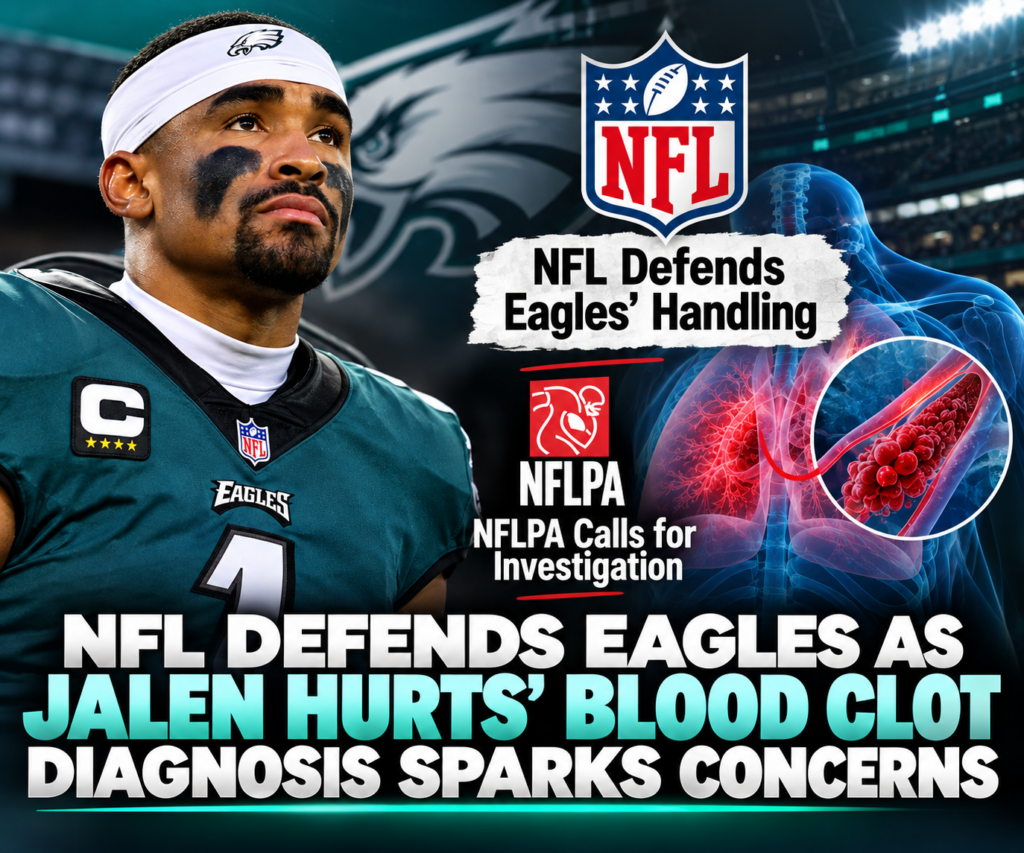
Football is a game built on toughness, determination and playing through adversity. But when an athlete’s health becomes a potentially life-threatening situation, the conversation must shift from winning games to protecting lives.
That conversation is taking center stage across the NFL following Philadelphia Eagles quarterback Jalen Hurts’ diagnosis of deep vein thrombosis and blood clots in both lungs.
The 28-year-old quarterback is expected to miss the remainder of the 2026 season as he undergoes treatment, raising serious questions about how his medical condition was handled before Philadelphia’s October 11 matchup against the Jacksonville Jaguars in London.
On Tuesday, October 20, NFL chief medical officer Dr. Allen Sills defended the Eagles’ medical staff, maintaining that the organization acted appropriately based on the information available at the time.
Speaking during the league’s fall meetings in New York, Sills rejected suggestions that physicians would knowingly place a player in danger.
“The notion that there are external factors or that any of our physicians would put a player in harm’s way, that’s nonsense,” Sills said.
Sills described Philadelphia’s medical approach as conservative and patient-focused, explaining that medical complications can develop even when appropriate procedures are followed.
However, the NFL Players Association isn’t ready to close the book on the situation.
In a statement released Tuesday evening, the union challenged the league’s response, questioning why conclusions were being reached without a formal investigation.
“The NFLPA is not aware of any NFL investigation into the medical care provided to Jalen Hurts,” the union stated.
The NFLPA also said the league previously informed the union that it did not plan to review Hurts’ treatment.
The union called for a full investigation before conclusions are reached, emphasizing the importance of medical accountability.
“Determining the facts is essential to ensuring players receive the highest level of care and protection going forward,” the NFLPA stated.
Despite those concerns, the Associated Press reported that the Eagles would not face disciplinary action for their handling of Hurts’ condition, citing a person familiar with the situation.
That decision raises an important question: How can the league confidently defend the medical decisions while the players’ union is still requesting a thorough investigation?
According to the Eagles, Hurts first reported calf discomfort on October 8 after being cleated during Philadelphia’s October 4 game against the Los Angeles Rams.
An ultrasound performed in London on October 10 revealed a superficial vein thrombosis, a blood clot located near the skin’s surface.
Following consultations with medical specialists, Hurts was cleared to play against Jacksonville the following day.
Doctors recommended additional monitoring and follow-up testing after the game and the team’s return to Philadelphia.
However, subsequent examinations revealed a more serious diagnosis.
On October 19, the Eagles and Hurts’ agent, Nicole Lynn, confirmed that the quarterback had developed deep vein thrombosis and bilateral pulmonary emboli, meaning blood clots were present in both lungs.
Although Hurts is clinically stable, doctors recommended anticoagulant medication, commonly called blood thinners, which prevents him from participating in contact football activities during treatment.
The quarterback is expected to miss the remainder of the season, although his medical team remains optimistic about his recovery and eventual return to football.
While the NFL and NFLPA continue debating the handling of Hurts’ medical care, his family is facing a much more personal reality.
Hurts’ mother, Pamela Hurts, made an emotional appeal to fans following news of her son’s diagnosis, asking supporters to keep him lifted in prayer.
“Send prayers. Prayers work.”
Her message was simple but powerful.
Beyond the touchdowns, championships and bright lights of the NFL is a mother concerned about her son’s health and well-being.
For Pamela, the immediate focus isn’t on when Jalen will return to the football field. It’s on his recovery and the hope that he will emerge from this frightening medical situation healthy.
Her request reminds us that behind every athlete is a family navigating challenges fans rarely see.
The football world knows Jalen Hurts as a quarterback, champion and leader. But before any of those titles, he is someone’s son.
And right now, his mother is asking for prayers.
The situation also raises broader questions about medical accountability throughout professional football.
NFL players regularly compete through injuries, but blood clots present dangers that extend beyond the physical demands of the game.
A pulmonary embolism can become life-threatening, making timely diagnosis and appropriate treatment critically important.
The NFL maintains that Philadelphia’s medical staff exercised proper judgment based on the information available. The players’ union argues that those conclusions should follow a complete investigation rather than precede one.
Neither position changes the immediate reality facing Hurts.
For now, his focus must remain on healing.
The Eagles will have to adjust without their franchise quarterback, but the larger conversation about medical transparency and player protection is far from finished.
Whether an investigation ultimately identifies mistakes or confirms that proper procedures were followed, the situation underscores an important responsibility shared by every professional sports organization.
Players are more than the names on their jerseys. They are sons, fathers, husbands and individuals whose lives extend far beyond football.
And sometimes the most important victory isn’t found on a scoreboard.
It’s making it home healthy.
You may also like
-
Dream Take Command of WNBA Finals with 97-71 Victory Over Valkyries in Game 3
-
New Colors, Rookie Milestones and Tough Lessons: Atlanta Gladiators Open 2026-27 Season
-
Falcons Billion-Dollar Move: Arthur Blank Welcomes Arctos to Atlanta’s Ownership Group
-
DREAM HISTORY MADE! Atlanta Claims First WNBA Finals Victory Behind Reese’s Dominant Performance
-
More Than Football: Falcons Honor Cristina Ulbrich and Celebrate Breast Cancer Survivors in Emotional Tribute